
Is the Mail Ballot War Over?
The Supreme Court kept Trump’s mail ballot rule on ice for the midterms, but the fight isn’t finished. Plus the postmark problem already costing votes, and the taxpayer-funded ad that stopped me cold.
Tuning In
I am a teensy bit late with this edition of the newsletter. The companion podcast aired on October 1st. Scheduling conflicts slowed me down a bit this past week. Apologies.
In the last edition of the newsletter we wrapped up our series on the SAVE Act. This week we take a look at mail-in voting (something President Trump has warred against since 2020) and I recount an Orwellian moment I had watching football.
Strong Signal
Tuning in the strong stories with weak reception.
It’s Not Over, It’s Just Starting
Even though President Trump’s disdain for mail-in voting has simmered since at least 2020, things reached their boiling point when he issued an executive order in March 2026 that affected mail-in ballots (among other things). That order kicked off a back-and-forth legal battle, bouncing from court to court for months before finally coming to rest at the Supreme Court September 14, 2026.
Here’s the short version. Trump wanted new rules on mail-in ballots — states would have to hand over voter lists, and the Postal Service would only deliver ballots that matched them. The Supreme Court left it blocked, at least for this year’s midterms.
In his concurring opinion, conservative Justice Brett Kavanaugh agreed the rule shouldn’t take effect this year, because election officials don’t have enough time to put it in place before the midterms without causing real problems. He also wrote something that’s easy to miss:
“there is at least a fair prospect that the final rule falls within the Postal Service’s statutory authority.”
—NPR / September 14, 2026
That’s a pretty strong signal that Kavanaugh thinks the rule might be legal. Just one vote, but Justices Samuel Alito and Clarence Thomas dissented on this ruling, so it’s possible they lean that way as well. That’s three. Enough votes to assume it could be allowed to move forward for future elections? No, but worth keeping an eye on. And if the rule does come back, the problems come back with it.
How We Got Here
A quick rundown:
- AUG 24: The Supreme Court lifted one of two court blocks on the order. It ruled only that the challenge had come too early, and said that didn’t mean the government’s measures would “necessarily be lawful.”
- AUG 27 to SEP 4: Days later, a federal judge in Boston blocked the Postal Service from putting its rules into effect, writing that no one had pointed to “any delegation Congress has made that would permit the United States Postal Service (USPS) to regulate election mail.” On September 4th she made the block longer-lasting.
- SEP 6: The administration asked the Supreme Court to step in again, the third time it had asked.
- SEP 13: A federal judge in Washington, D.C., blocked the whole rule too, writing that “no statute grants the Postal Service the power to issue key parts of the Rule.” He also found that, without a freeze, “there is an increased risk that a significant number of otherwise appropriate absentee or mail-in ballots will ultimately not be counted in the upcoming elections.”
- SEP 14: The Supreme Court answered the administration’s September 6th request by leaving the Boston judge’s block in place. Justices Alito and Thomas dissented.
Judges kept pausing it, and the administration kept asking for the pause to be lifted. With the Supreme Court’s September 14th, 2026 decision, we finally have an answer, at least for the upcoming midterms, but what happens to elections beyond that is still very much an open question.
What Was Built (and What Does It Mean?)
Even though the battle over this issue has raged since President Trump issued Executive Order 14399 in March 2026, the intensity increased after a disclosure letter sent through the group Whistleblower Aid to Senator Richard Blumenthal of Connecticut alleging “…potentially catastrophic problems in the development of the United States Postal Service’s new system for handling federal election ballot mail.”
Words like “catastrophic” tend to get people’s attention, but before getting into the specifics of the whistleblower’s claims we need to establish how the proposed system would work.
One wrinkle worth knowing: the rule that got blocked is smaller than what Trump asked for. His executive order proposed that states hand the Postal Service a list of every eligible voter, not just the ones getting mail ballots. That part didn’t make it into the rule. But getting full voter rolls is something his administration has chased in other ways, including suing 30 states and D.C. for them.
How The System Is Supposed To Work
- State uploads its list of voters receiving mail ballots along with barcode information
- Every ballot gets two barcodes — one on envelope going out, one on envelope coming back
- Barcodes get checked when arriving in large batches from the state
- One bad barcode = the whole batch gets rejected
- No clear way to appeal. Start over.
- Once a batch is accepted and delivered to individual voters, ballots coming back from voters will again be scanned and checked against database
First things first. The main reason Kavanaugh gave was time. Something this complicated can require a year or more to implement, which even if the wheels went in motion (and stayed in motion) as soon as the executive order was signed in March, it still wouldn’t be enough time for something this complex (and important). The whistleblower’s account backs this up in detail, but in light of the recent Supreme Court action I’m not going to focus on the time element here. Instead, I want to look at why this system may not be a good idea, even with enough time to execute it.
Beyond The Timing Problem
Even if USPS had gotten a full year to build this, and even if every county could afford new barcode printers tomorrow, the system would still have problems. Here’s what doesn’t go away just because there’s more time on the clock.
One bad barcode, whole batch gone
States send ballots to the postal service in large batches that can run to more than 2 million, depending on the state or county. If even one ballot in a batch fails a scan, the entire batch bounces back to the state. This isn’t a bug from the rushed execution; it’s the design. For comparison, according to the whistleblower report the USPS’s own older bulk-mail process allows a 20% failure rate. This one allows zero.
More databases, more headaches
Keeping voter information accurate is difficult. This rule complicates the problem by introducing a separate database that needs to be kept in sync with state voter rolls. This sounds like a small problem until you consider that even one ballot with information out of sync can keep tens of thousands (even millions) of ballots from reaching voters.
No clear way to challenge a mistake
If the system wrongly flags an eligible voter’s ballot, there’s no clear process for the voter, or the state, to fix it. The rule only promises unspecified “escalation procedures.”
They won’t say how often it’ll fail
USPS declined to say how often it expects ballots to get rejected. Not “we’re still calculating it” — a flat refusal to disclose. The public was asked to accept a new checkpoint on their ballots without ever being told the odds of getting caught in it by mistake.
The Postal Service, now a gatekeeper
Historically, USPS delivered whatever ballots election officials handed it. Under this rule the USPS decides whether a ballot gets mailed at all. That’s a new kind of power over who gets to vote, held by an agency that has never been an elections authority. If this rule takes effect, it’s worth remembering next time ‘privatize the Postal Service’ comes up—should a private company have this power?
States are stuck in the middle
States are required by their own laws to mail ballots to voters on a set schedule. This rule hands USPS a veto over that mail. However much runway you give it, that’s two systems of law pointed at each other, with voters caught in between.
What about the troops?
The rule says military and overseas voters are exempt from the new envelope and barcode requirements — and to be fair, that exemption is real, written into the rule itself. But nowhere does USPS explain how a postal clerk, scanning barcodes by the thousand, is supposed to tell “this ballot is exempt and correctly missing a code” from “this ballot isn’t exempt and is missing a code by mistake.” That’s true both ways — for the batches of ballots going out to deployed troops and overseas citizens, and for their completed ballots coming back.
A coalition of former national security officials has raised exactly that concern in a court filing, warning it could leave deployed troops and their families with no real way to fix a wrongly bounced ballot before the deadline — since, unlike a voter at home, they can’t just show up to a polling place instead. USPS hasn’t publicly answered that specific operational question. Until it does, this is a real open question, not a settled one.
Some places can’t comply
Jeff Ellington, CEO of Runbeck Election Services says “most of the counties in the country don’t have the type of barcodes needed to make the system function.”
Think of a barcode like a tracking number. The rule wants every voter to have their own, on the envelope going out and the one coming back. Many counties already do that on the way out, but use one generic code on the way back.
That sounds like a trivial fix until you realize how small and understaffed many counties are. In Colorado, 14 of 64 counties don’t use the required barcodes, and most of those are tiny. The state’s deputy elections director said in a court filing that these offices often rely on one person who prints, stuffs and mails ballots by hand, and “likely would be unable to comply”. Roughly 72,000 Maryland voters get their ballot by email and print their own return envelope (there’s no way to put a government tracking code on that). Multiply these examples by a thousand for a country the size of the United States and you start to understand the enormity of the task from this proposed change.
Final Thoughts On The New System
Everything I listed here is a concern should this rule ever take effect, but the bigger worry is that the administration tried to force these changes through with an executive order—not an act of Congress.
Anyone interested in election integrity and the integrity of our democratic process should read the entire whistleblower report and not just a news summary. It’s time well spent.
There Is Another Problem
Unrelated to the executive order the Supreme Court intervened on, there is another problem with mail-in voting currently affecting voters. It comes from changes the Postal Service made last year to the postmark.
The Postal Service now stamps postmarks at distant processing centers instead of local post offices, so the date on your ballot’s postmark may not be the day you mailed it. Problem is, many states count a mail ballot as long as it was postmarked by Election Day. Election officials say that’s where things are going wrong.
The Postal Service insists it hasn’t changed how it postmarks mail, and blames changes to how mail moves before it gets stamped. But in the same breath, it admits the date on your postmark won’t always match the day you mailed it. Call that whatever you want; for a voter, it’s a change.
Here’s what officials are reporting so far:
- Washington: In the August primary, the share of ballots rejected for late postmarks rose to 1.1%, up from 0.8% in 2024, according to state data. A report from Sen. Maria Cantwell and Secretary of State Steve Hobbs, both Democrats, calls that a 32% jump in the rate. It says the rate more than doubled in 19 counties, even as it fell in the biggest ones, including King and Pierce. Cantwell said ballots that voters believed they had mailed in time were rejected because they “lacked a timely, verifiable postmark, or arrived too late to be counted.”
- California: About 93,500 mail ballots were rejected as not received on time in the June primary. That was the most common reason among roughly 148,000 rejected ballots. It’s up from about 70,000 in 2022 and 76,000 in 2024, though turnout was higher this time.
- Wisconsin: Ballots there have to arrive by Election Day, so the issue is slow delivery, not postmarks. After a survey in which two-thirds of clerks reported mail problems, the state’s Elections Commission wrote to the Postmaster General. One county clerk said more than 100 ballots in her county were tossed for arriving after Election Day, some postmarked weeks earlier. She called April “the worst ever” in her 28 years.
His Own (not so) Private War
 Robert Farley, Saranac Hale Spencer, Alan Jaffe
If all of this feels vaguely familiar it’s because President Trump has railed against mail-in voting for a long time, aiming many a late night Tweet or Truth post squarely at the practice. Unfortunately his efforts go beyond social media posts and stretch back many years.
- APR 7, 2020: At a White House briefing, Trump said, “The mailed ballots are corrupt, in my opinion.” Experts say fraud by mail happens but is rare. (FactCheck.org)
- JUL 30, 2020: He tweeted that “Universal Mail-In Voting (not Absentee Voting, which is good)” would make the election “the most INACCURATE & FRAUDULENT Election in history,” and floated delaying it. FactCheck.org called the split between mail-in and absentee voting “a distinction without a difference.” Only Congress can move an election. (FactCheck.org)
- SPRING 2024: After years of calling mail voting “corrupt” and “crooked,” Trump and Republican groups urged their own voters to use it. His post said, “ABSENTEE VOTING, EARLY VOTING, AND ELECTION DAY VOTING ARE ALL GOOD OPTIONS.” Months earlier in Michigan, he had said, “Mail-in voting is totally corrupt…Get that through your head.” (Axios)
- MAR 25, 2025: Trump signed Executive Order 14248, which told the attorney general to go after states that count mail ballots received after Election Day. (Federal Register) Courts have largely blocked its key provisions. (Votebeat)
- AUG 18, 2025: He promised to “lead a movement to get rid of MAIL-IN BALLOTS” and told reporters he was working on an executive order “to end mail-in ballots because they’re corrupt.” (FactCheck.org)
- FEB 24, 2026: In the State of the Union, he said, “No more crooked mail-in ballots except for illness, disability, military, or travel — none.” The SAVE America Act he was urging Congress to pass wouldn’t actually do that. (Votebeat)
- MAR 2026: He pushed to add that limit to the bill, posting “NO MAIL-IN BALLOTS (EXCEPT FOR ILLNESS, DISABILITY, MILITARY, OR TRAVEL!).” Sen. Eric Schmitt introduced an amendment to do it. (FactCheck.org)
- JUL 16, 2026: In a prime-time speech, he again made what FactCheck.org calls the unfounded claim that mail-in ballots are “inherently corrupt.” (FactCheck.org)
- Through all of it, Trump has voted by mail himself several times, including once earlier this year.
This latest battle over new Postal Service rules is just the most recent barrage in a war based on a widely discredited conspiracy theory. I know, it’s hard to believe someone would go to war over unfounded claims, but believe it or not, it does happen.
The Battle Was Won, but the War isn’t Over
Restricting mail-in voting wasn’t the only thing the Trump administration was relying on to affect the upcoming election, however. Next week we take a look at some of the more disturbing signs this election cycle may be anything but normal.
Big Brother Linebacker
 Joseph Konig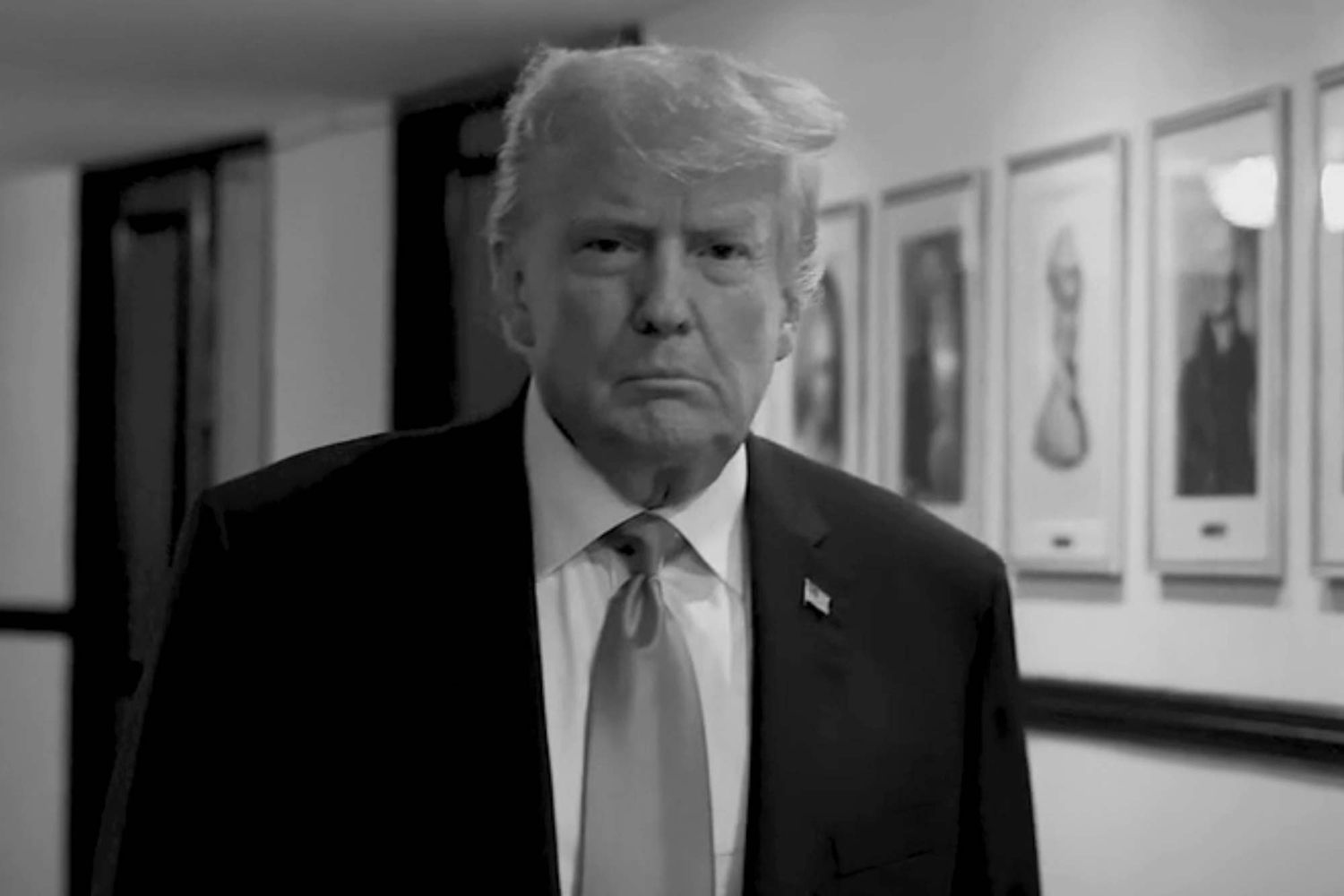
On Sunday, September 27, the NFL game on my big screen TV suddenly switched to President Donald Trump in black and white, walking down a hallway in slow motion. The audio was a speech he gave repeatedly on the 2024 campaign trail, vowing to “cast out” and “rout” the “villains.” At first I didn’t have much of a reaction, it is election season after all, until the last few seconds of the ad when the text, “Paid for by the U.S. Government” appeared.
The NFL linebackers I’d been watching seconds before couldn’t have done a better job of knocking the air from my lungs. I felt a genuine chill, and the sensation that I’d just woken up in an Orwell novel.
If President Barack Obama had spent $20 million producing ads with a cut up of his campaign speeches telling his supporters of all the great things he had done his first four years in office, I would’ve been disgusted at the misappropriation of taxpayer money. But it wouldn’t have hit me as hard as this.
In Orwell’s novel 1984, the government doesn’t just praise the leader—it tells people who to hate. Here we have our government paying to tell citizens that some of their fellow Americans are enemies to be “cast out,” “routed” and “liberated” from. Big Brother indeed.
After the chill subsided, I wanted to know how we got here. This is what I found.
🟨 Personal Foul
Every year, the law that funds the government includes a rule that no federal money can be spent “for publicity or propaganda purposes within the United States” unless Congress signs off. Your tax dollars pay for the government to do its job, not sell you on the people doing it.
The White House says these ads follow the rules. It calls them public service announcements and points to past campaigns like Obama’s health care enrollment ads and Biden’s vaccine ads. Neither president appeared in them. Trump is the star of his.
The White House also says they’re “very clearly not campaign ads” because Trump isn’t on the ballot and the ads don’t ask viewers to do anything.
Here’s the catch. The “final battle” ad isn’t new. Trump posted a nearly identical version to Truth Social in January 2024, while he was running for president. That one ended by asking supporters to text TRUMP to a reply number. The new version drops that line and adds a different one: “Paid for by the U.S. Government.”
🟨 Offsides
Senate Majority Leader John Thune, the top Republican in the Senate, put it simply: “I like the message, but it shouldn’t be paid for by taxpayer dollars.” Texas Sen. John Cornyn said everyone knows taxpayer money isn’t supposed to be used this way. Louisiana Sen. John Kennedy said on CBS that no public official, Trump included, should spend public money on ads for themselves.
On the Democratic side, Representatives Jamie Raskin and George Whitesides asked two federal watchdogs to investigate: the Government Accountability Office (GAO), Congress’s nonpartisan auditor that tracks how federal money is spent; and the Office of Special Counsel, which enforces rules keeping federal employees out of campaign politics. GAO confirmed it received the request and says it’s still deciding whether to take it on.
🟨 Illegal Fair Catch Signal
So where did $20 million for TV ads come from? The Washington Post traced it:
- It started as border money. In 2025, Congress gave Customs and Border Protection $6.7 billion for things like border surveillance, equipment at ports of entry, and fighting drug trafficking.
- It got moved. On September 19, 2026, the White House budget office shifted about $20 million of that into a Homeland Security account for commemorative events. That account normally gets around $1 million a year for things like memorials for officers killed in the line of duty. PBS reports budget director Russ Vought approved the transfer.
- It went to an ad agency. The next day, Homeland Security signed a $20 million contract with a Maryland ad firm for a national media campaign. According to CNN’s sources, Trump personally helped shape the videos, down to choosing the footage.
About a week later, the ads were running during NFL games. By October 6, nearly $12 million worth had aired, according to the ad-tracking firm AdImpact.
🟨 Unsportsmanlike Conduct
Here’s the good news: the pushback worked, at least partly. On October 5, after criticism from both parties, Trump posted that his super PAC will pay for the ads from now on. The bad news: a White House official says that “doesn’t mean there’s any reimbursement coming” for the nearly $12 million taxpayers already covered.
Let me again stress the problem here is using tax dollars to promote a politician along with the message being sent. My revulsion isn’t specific to Trump or any political party.
PSA or Public Trump Announcement — either way, you paid for it.
Signing Off
Thank you for reading, and until next week, stay tuned in.
Fritz